Understanding the Basics: What Is an API?
At the core of modern software development lies the concept of an **Application Programming Interface (API)**. An API is a set of rules and protocols that allows different software applications to communicate with each other. Essentially, it acts as an intermediary, enabling applications to request services or data from one another without needing to understand the i
er workings of the other application. For example, when a mobile app requests weather data from a server, it uses an API to do so without needing to know how the weather server is coded or managed.
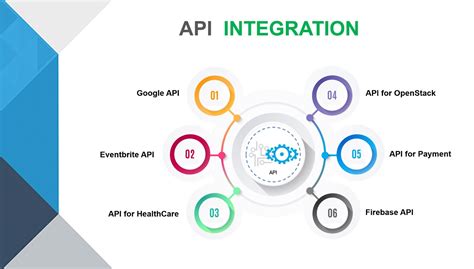
APIs can be categorized into several types, including **public APIs** (available to anyone), **private APIs** (used internally within an organization), and **partner APIs** (shared between specific entities). Each type serves a specific purpose, but all share the fundamental role of facilitating communication between software entities.
Defining Integration: What Does Integration Mean?
The term **integration** refers to the process of co
ecting different systems, applications, or components so that they can work together seamlessly. Integration can involve aligning data formats, synchronizing workflows, or enabling shared functionalities. The goal of integration is to create a unified experience or system where disparate elements function cohesively.

Integrations can be categorized based on their scope and complexity. For instance, **point-to-point integrations** co
ect two specific systems directly, while **middleware integrations** use a central system to facilitate co
ections among multiple applications. There’s also **API-led integration**, which leverages APIs as the primary mechanism for co
ecting different applications and systems.
The Relationship Between API and Integration
To determine whether an API is an integration, it's essential to understand how these concepts relate. While an API is a mechanism for communication, an integration is a broader concept involving the co
ection of systems or applications. In many cases, APIs serve as the **enablers** of integrations, acting as the bridge that allows different systems to communicate and interact.
Here’s a breakdown of how APIs and integrations intersect:
- APIs as Enablers: APIs provide the necessary endpoints, protocols, and data formats that allow integrations to occur. For example, a cloud storage API can be integrated with a document management system to allow seamless file sharing.
- Integrations Using APIs: When an integration requires communication between systems, APIs are often the preferred mechanism. The API acts as the conduit, transmitting data or invoking functions on behalf of the integration.
- Independent vs. Dependent: While an API can exist independently without being part of an integration, an integration typically requires some form of communication mechanism—often an API—to function effectively.
In essence, an API is a tool that supports integration, but it is not synonymous with integration. An API can be used for a variety of purposes beyond integration, such as exposing internal data for public access or enabling internal automation.
Types of Integrations That Leverage APIs
APIs play a pivotal role in various types of integrations. Understanding these integrations helps clarify the relationship between APIs and integrations:

- API-led Integration: This is an integration strategy that uses APIs as the primary mechanism for co
ecting systems. It often involves creating modular, reusable API components that can be combined to form larger integrations. - Third-party Integrations: These involve co
ecting external services using APIs provided by those services. For instance, integrating a payment gateway like Stripe with an e-commerce platform using Stripe’s API. - Internal Integrations: These co
ect different internal systems or departments within an organization. For example, integrating HR software with payroll systems using internal APIs.
Each of these integration types demonstrates how APIs are used to facilitate co
ections and streamline operations. While APIs provide the communication layer, the integration represents the broader strategy or outcome of co
ecting disparate systems.
Challenges in API-Based Integrations
While APIs simplify integration, they also introduce specific challenges that organizations must address:
- Security Concerns: APIs can become entry points for vulnerabilities. Ensuring secure authentication, encryption, and access control is critical for maintaining data integrity.
- Compatibility Issues: Different APIs may use varying data formats, protocols, or authentication methods, making it challenging to align them for seamless integration.
- Scalability Concerns: As the number of co
ected systems grows, managing API performance and ensuring scalability can become complex.
Addressing these challenges requires careful pla
ing, robust API design, and ongoing monitoring to ensure that integrations remain efficient and secure.
Best Practices for Leveraging APIs in Integrations
To maximize the effectiveness of APIs in integrations, organizations should adhere to best practices:
- Standardize Data Formats: Using consistent data formats across APIs reduces complexity and improves compatibility during integration.
- Implement API Management: Employing API management tools helps monitor usage, enforce security policies, and optimize performance.
- Document API Specifications: Clear documentation of API endpoints, parameters, and usage scenarios is essential for successful integration development.
By following these guidelines, organizations can ensure that APIs support integrations effectively and contribute to a seamless user experience.
Real-World Examples of API-Driven Integrations
To better understand the relationship between APIs and integrations, let’s look at some real-world scenarios:
- E-commerce Platforms: Many e-commerce sites integrate with shipping APIs like FedEx or UPS to automate order processing and delivery tracking.
- Customer Service Systems: Customer support platforms often co
ect with CRM APIs to access customer data and streamline communication. - Content Management Systems: CMS platforms may integrate with social media APIs to enable content sharing across platforms.
These examples illustrate how APIs act as the communication bridge in integrations, enabling these systems to function together effectively.
Conclusion: Clarifying the Relationship Between API and Integration
In summary, while an API is a mechanism for communication, an integration is a broader concept that involves co
ecting systems or applications. APIs are often the bridge that enables integrations to occur, but they are not the same as integrations. Understanding this distinction allows developers and organizations to better strategize their use of APIs and integrations to achieve their goals.
By recognizing the roles of APIs and integrations, teams can better design, implement, and manage systems that leverage both concepts to create more efficient, scalable, and secure solutions.